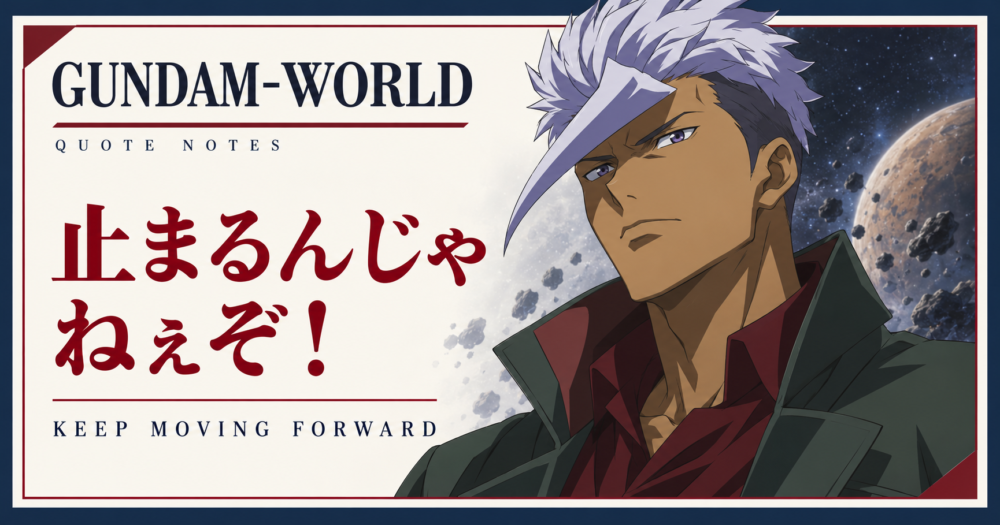
Orga’s “Tomaru n ja nee zo” means “Don’t stop.” In its original scene, it is a wounded leader’s final message to the people of Tekkadan. The line comes from episode 48 of Mobile Suit Gundam: Iron-Blooded Orphans. Detached from the scene, it can sound like a simple order to persevere. Put back in place, it is tied to the future he wants his companions to survive to reach.
Spoilers: episode 48 and Orga Itsuka’s death. This article discusses the source scene behind the meme. English renderings are our translations for analysis, not quotations from a particular licensed subtitle or dub.
止まるんじゃねぇぞ
Orga Itsuka · Mobile Suit Gundam: Iron-Blooded Orphans
Tomaru n ja nee zo — “Don’t stop.”
Where the quote comes from
Episode 48 is titled “Promise.” The broadcaster MBS’s account describes Orga being shot while shielding Ride, rising despite his injuries and continuing forward. It also places the attack just after a possible escape route for the group has begun to emerge. Hope and loss are adjacent, rather than belonging to separate chapters of the story. Source: MBS’s episode 48 scene feature.
That sequence matters to the words. Orga has spent much of the story being the person others look towards for a destination. At the moment when his own movement is about to end, he tries to leave them a way to imagine movement continuing. His final instruction holds onto the leader’s role even as the body that carried it fails.
An order, a reassurance and a wish
The official Gundam Power Word feature identifies the longer passage as Orga’s last message to Tekkadan’s members. The short phrase is the end of that message, not an isolated lecture about effort. Its preceding idea connects their continued movement with his continued presence ahead of them. Source: Bandai’s official Power Word listing.
Our reading is that the command contains a wish he can no longer personally guarantee. He wants the others to survive the ending of his leadership. That makes “don’t stop” different from claiming that their present course has been flawless. A final appeal can preserve affection and commitment while leaving the story’s failures painfully intact.
What makes “n ja nee zo” sound rough?
Tomaru means “stop.” The construction n ja nai, here in the rougher spoken form n ja nee, can function as a prohibition or forceful admonition. The final zo adds assertive force in this context. It sounds like the register of Orga’s dealings with his companions, rather than a polished public address.
“Don’t stop” keeps the instruction direct. “Keep going” turns it into a positive command and can sound more encouraging in English. “You’d better not stop” adds a threat-like flavour that may become misleading when separated from the scene. A translator has to balance the rough surface with the attachment underneath it.
The Japanese does not specify an object such as work, fighting or revenge. Context supplies the direction. Expanding the quote into “keep fighting forever” would decide something the short sentence itself does not say. It also risks losing the immediate concern for people who need a way to live beyond their present crisis.
Why the meme and the original scene feel so different
A short line, a distinctive pose and an emotionally heightened sequence are easy to detach and repeat. Repetition can make the timing familiar even to someone who has not watched Iron-Blooded Orphans. Once the image becomes recognisable on its own, a joke may depend on recognition rather than on the loss that originally gave it force.
Knowing that afterlife does not require a viewer to have only one permissible reaction. It is still useful to return to the dramatic source and notice what a clipped version leaves out: the emerging escape plan, Ride, the members elsewhere and Orga’s difficulty separating himself from the role of leader. The original scene has more people in it than the meme usually allows.
What is worth carrying away from the line?
The story makes it possible to admire Orga’s desire to protect his companions while questioning the decisions that placed them in danger. Those responses can coexist. Treating the quote as a blanket rule that nobody should ever pause or retreat would flatten the tragedy. It is a character’s message in a particular emergency, and its value comes from that specificity.
Three questions about the quote
Which episode is it from? Episode 48, “Promise,” in the second season of Iron-Blooded Orphans.
Is “Don’t stop” all he says? It is the remembered closing phrase of a longer final message to Tekkadan. This article quotes only that short portion.
Does the Japanese literally mean “keep fighting”? No. The verb is “stop”; the scene and relationships supply what continuing means.
For other words that become complicated when someone else inherits them, read Suletta’s “gain two” motto and Marida and Banagher’s “even so”. Sleggar’s wartime acknowledgment offers a different final-combat tone.
References: MBS, episode 48; Bandai, Gundam Power Word 108. The reading of leadership and inheritance is our interpretation.
Featured image: original AI-generated fan illustration created for Gundam-World.







Comments