English · 日本語で読む
PR · As an Amazon Associate, Y-bow earns from qualifying purchases.
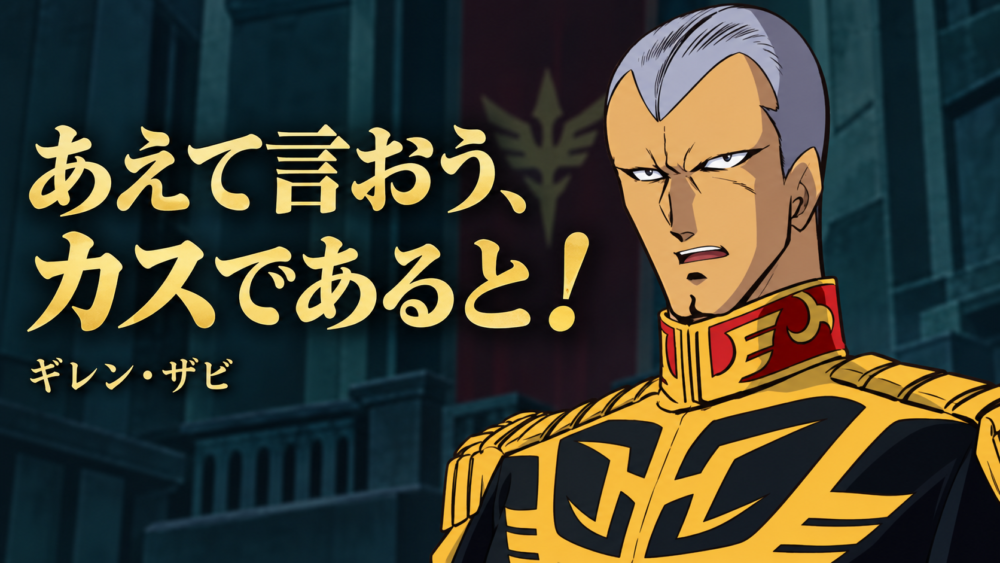
“Aete iō, kasu de aru to!” is Gihren Zabi’s contemptuous declaration around the battle of A Baoa Qu in Mobile Suit Gundam. In the original TV series, look for episode 42, “Space Fortress A Baoa Qu.” It is not the same speech as Garma’s funeral.
Our explanatory rendering, “Let me say it: they are scum,” conveys the insult rather than claiming to reproduce an official English dub. Understanding the target of the remark makes it more than an isolated catchphrase. Late One Year War spoilers follow.
Who says the line, and what does “kasu” refer to?
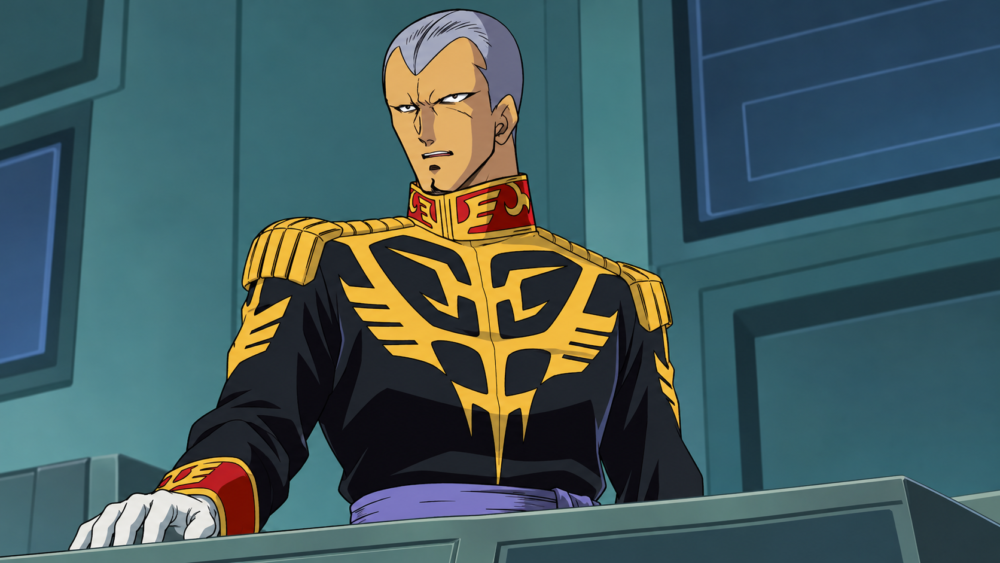
The speaker is Gihren Zabi, the Zeon leader. Kasu is not a character’s name or a mobile-suit designation. In this use it dismisses the opposition as worthless remnants or dregs. The insult is part of a speech intended to shape his soldiers’ view of the enemy.
That distinction matters: a leader expressing confidence does not establish that his assessment is accurate. The line tells us how Gihren presents the situation, and should not be repeated as a neutral judgment of the opposing forces.
Episode 42: the situation after Solar Ray
The setting is the decisive battle around the space fortress A Baoa Qu. Solar Ray has inflicted devastating damage on the Federation fleet, but Federation forces still advance. Gihren diminishes that remaining threat while projecting an advantage to his own side.
COSPA’s licensed Gihren shirt description also identifies the context as the speech following Solar Ray’s attack on the Federation fleet. It is therefore misleading to explain this particular insult as a direct description of his father Degwin. The target and the surrounding military argument must stay together.
Why does “aete iō” make the insult memorable?
Aete suggests doing something deliberately despite a reason for hesitation or restraint. Iō announces that the speaker will say it. Placed before the judgment, the phrase creates a short expectation: the audience waits for the blunt conclusion.
The conclusion then compresses the enemy into a dismissive label. As an interpretation of rhetoric, this can be read as a way to reduce fear and reinforce confidence. It is not evidence that victory is assured, and the speech’s force should not be confused with the battle’s outcome.
Outside fiction, the word remains an insult. Borrowing the introductory construction for a joke is different from directing the full phrase at another person. A guide to its origin does not make it a respectful way to address people.
Why this is not Garma’s funeral speech
Gihren’s funeral oration is another famous scene, connected with TV episode 12, “The Threat of Zeon.” Episode 42 belongs to a much later military situation. The same speaker and the general category “speech” are not enough to identify a quotation.
Viewers who know Char’s “because he was a boy” remark may associate that earlier sequence with Gihren’s broadcast. Keep the funeral and the fortress battle separate. Checking that single piece of context prevents an otherwise convincing but incorrect episode citation.
A licensed product with the actual words: COSPA T-shirt
The card below uses COSPA’s “Aete iō, kasu de aru to” T-shirt in SUMI, size M. This is merchandise bearing the quotation, not a generic Gihren item or the separate design dominated by his portrait.
We checked purchase acceptance for the selected Amazon Japan item. Consult its measurements rather than assuming that a size label will fit, and recheck the seller, condition and dispatch terms. We have not worn it or tested its fabric, so no durability or comfort claim is implied.
The licensed photo comes through a Rakuten advertisement; the yellow purchase button uses direct Amazon Associates. The matching design does not mean that the two shops share stock, pricing or shipping conditions.
Check item & availability on Amazon Japan
Product photo and comparison link: Rakuten Ichiba via Moshimo Affiliate. The yellow button uses direct Amazon Associates. Seller, price, shipping, stock, condition and extras differ between retailers.
Frequently asked questions
Does Gihren mean his father?
Not in the context explained here. The speech belittles the Federation forces that remain a threat after Solar Ray.
Which version’s numbering is being used?
Episode 42 of the original TV series. A theatrical compilation has a different structure and should not be searched by that episode number.
Is the English phrase an official subtitle?
No. It is our translation for explaining the Japanese expression and its contemptuous tone.
Related reading
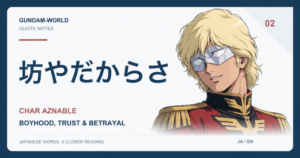
- “Bouya Dakara Sa”: Char’s Quote, Garma and English Translations
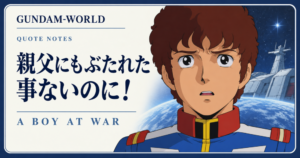
- “Even My Father Never Hit Me!”: Amuro’s Gundam Quote Explained



Comments