日本語で読む · English
Spoilers: this commentary discusses the scene and the characters’ relationship. English renderings below are our own, not quotations from an identified licensed subtitle or dub.
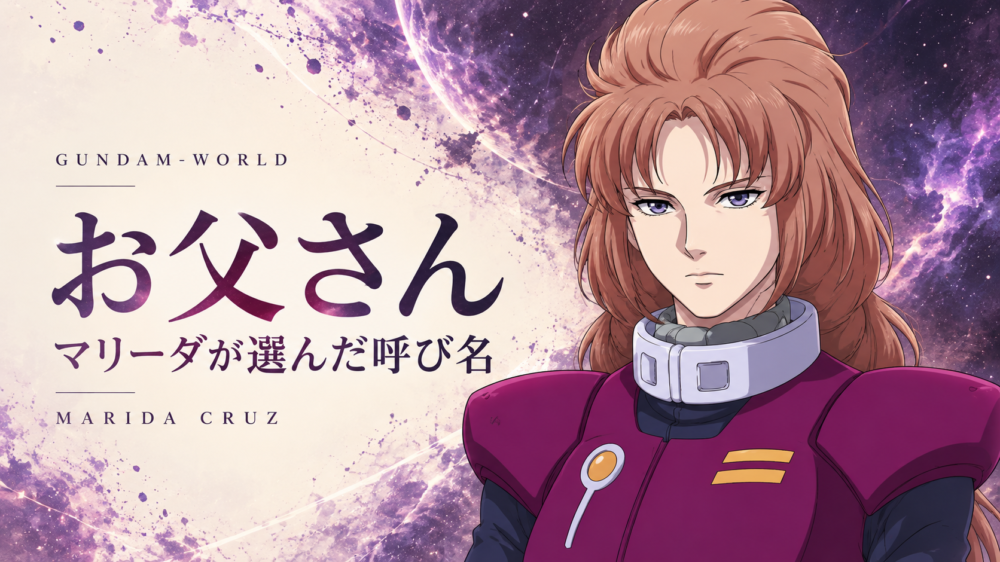
Marida Cruz’s “Otōsan” is only a form of address, yet it carries the weight of a much longer speech. In Gundam Unicorn, calling Zinnerman her father changes how we hear their relationship. She is not simply a capable subordinate awaiting instructions; she has a wish of her own to express.
お父さん
Marida Cruz, Mobile Suit Gundam Unicorn
The exchange in OVA Episode 6
This article concerns the conversation in OVA Episode 6, “Two Worlds, Two Tomorrows,” rather than Marida’s final events in Episode 7. She asks Zinnerman to allow her choice. His reply, framed as a final order, tells her to follow her own heart. The short address belongs to that exchange of trust.
“Father” here does not establish a biological fact. It names a relationship that the characters have formed. Someone who could be approached as a commander is also the person from whom she seeks personal understanding. That movement—from assigned role to chosen relationship—is what makes the word memorable.
Having a wish of her own
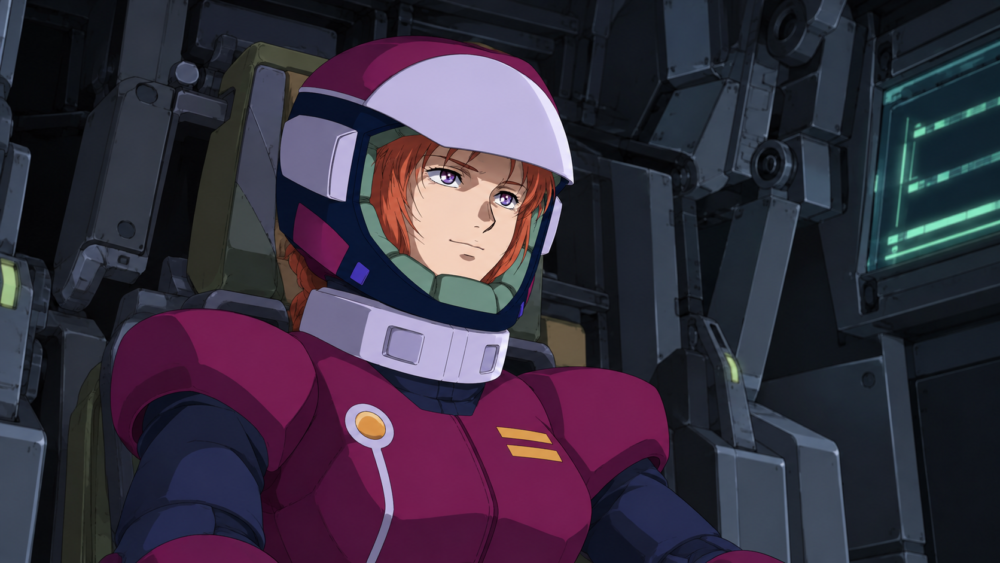
Being useful to another person and choosing a purpose for oneself are different things. Marida’s history makes that difference especially painful. In this exchange, her own desire becomes something she can state aloud, rather than something that must be replaced by an order.
The scene need not be read as complete independence from everybody else. Asking for support is compatible with having agency. What matters is that the wish is hers to express, and that Zinnerman does not use her attachment to him to dictate its content. Affection can support a decision without owning it.
“Dad” or “Father”?
Our rendering: “Dad.” English “Dad” usually sounds more intimate and everyday than “Father.” Japanese “otōsan” can carry both ordinary familial closeness and a respectful form. There is no single English noun that preserves every part of that balance.
“Father” can be moving if the aim is a solemn recognition of the relationship. It can also sound more formal than the Japanese moment feels. “Dad” makes the emotional closeness immediate, but may lose some restraint. Neither option by itself supplies the years of experience behind the address; the surrounding scene must do that work.
Listening across editions is therefore more rewarding than treating a dictionary match as the final answer. Notice the pause before the word, how much the speaker leaves unsaid, and how Zinnerman receives it. A restrained performance can make a short line carry more than an explanatory speech.
Read both sides of the conversation
Our Zinnerman commentary explores the apparent contradiction of ordering somebody to choose freely. Read together, the two articles ask the same question from different positions: how can a person protect a loved one without taking over their life?
Watch the exchange
Reader-provided scene video on Niconico — start around 6:00. This is an external viewer-uploaded resource, not an official upload. Availability may change.
Sources and further reading
Official Gundam Unicorn series page
Comments