日本語で読む · English
Spoilers: this commentary discusses the scene and the characters’ relationship. English renderings below are our own, not quotations from an identified licensed subtitle or dub.
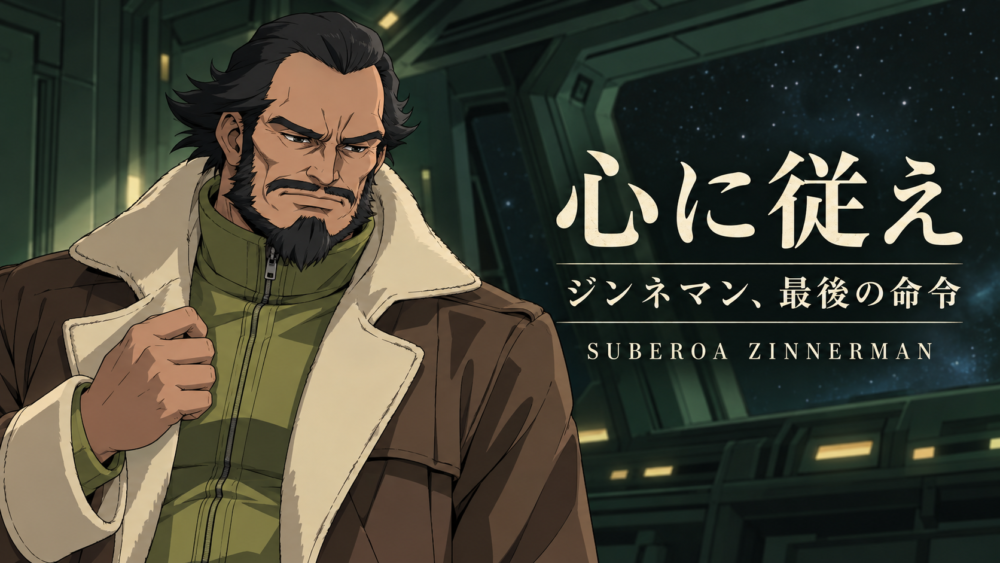
Zinnerman’s final order to Marida is powerful because it uses the language of command to recognize somebody else’s freedom. In Gundam Unicorn, “Follow your heart” is not an isolated motivational slogan. It is an answer to a particular person, with a difficult history, who has expressed a wish of her own.
許す。最後の命令だ。心に従え
Suberoa Zinnerman, Mobile Suit Gundam Unicorn
Where does the line occur?
The exchange discussed here belongs to OVA Episode 6, “Two Worlds, Two Tomorrows.” It should not be conflated with Marida’s final events in Episode 7. The Galencieres captain is responding to Marida, whose address to him as her father brings the personal relationship into their military hierarchy.
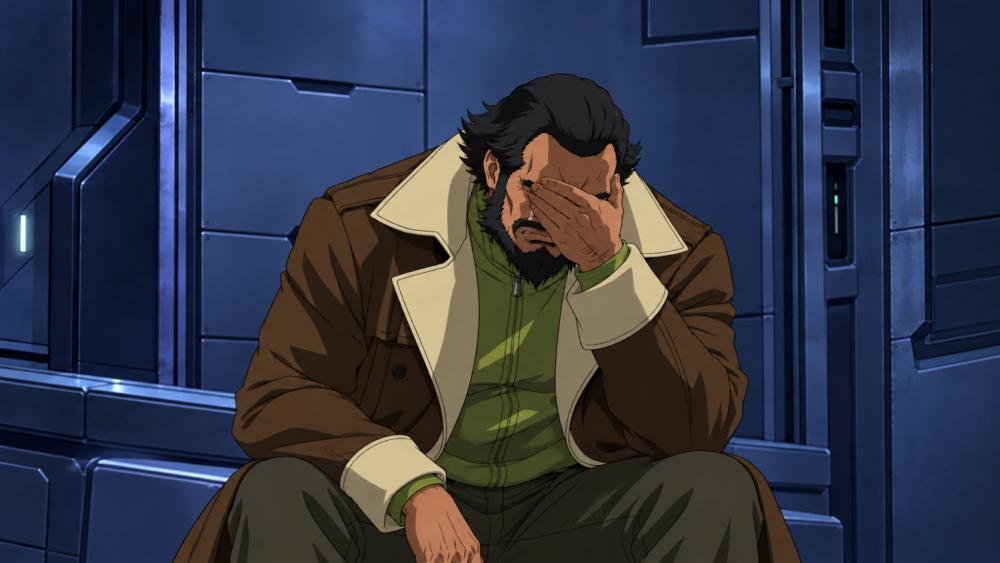
“Yurusu”: permission rather than blanket forgiveness
Our rendering: “Permission granted. This is my final order: follow your heart.” Japanese “yurusu” can mean to permit or to forgive. The object is omitted here because the conversation supplies it. Translating it as “I forgive you” would make an offense or guilt sound more central than the request he is answering.
“Permission granted” preserves a commander’s concise register. It also leaves the emotional work to what follows. He does not give Marida a universal exemption from consequences; he accepts that she may act on a wish that is her own. That is a narrower, more meaningful kind of permission.
The contradiction inside “my final order”
An order normally replaces another person’s discretion with the speaker’s decision. Zinnerman uses that familiar structure to redirect Marida toward her own judgment. The line’s paradox is that the authority giving the command tells her to stop treating that authority as the only source of purpose.
Simply telling somebody to “do whatever you want” can sound like abandonment. Here, the firmness of the response gives reassurance. He recognizes the wish instead of dismissing it, while declining to dictate its content. In our reading, his care is expressed through a willingness to let go of control.
The word “final” sharpens that movement. It need not be reduced to a prediction about the exact sequence of later events. Within this conversation it marks a boundary: the next decision should not be justified solely by the fact that he commanded it. He trusts Marida to be more than an instrument of his needs.
“Follow” or “obey” your heart?
“Follow your heart” is natural English, but it is familiar enough to sound like general advice about romance or ambition. Keeping “This is my final order” prevents the military and personal tension from disappearing. “Obey your heart” echoes the force of “shitagāe” more directly, though it sounds less idiomatic.
Neither choice substitutes for the scene. The pauses between permission, finality and command are part of how the thought unfolds. A translation that combines everything into a casual “do what feels right” may communicate the practical outcome while losing the act of releasing another person from dependence on orders.
Watch the exchange
Reader-provided scene video on Niconico — start around 6:00. This is an external viewer-uploaded resource, not an official upload. Availability may change.
The other half of the exchange
Read Marida’s “Dad” and the choice of family alongside this article. Her address and his reply make one conversation: she names the person whose understanding matters, and he answers without claiming ownership of her future.
Sources and further reading
Official Zinnerman character profile



Comments