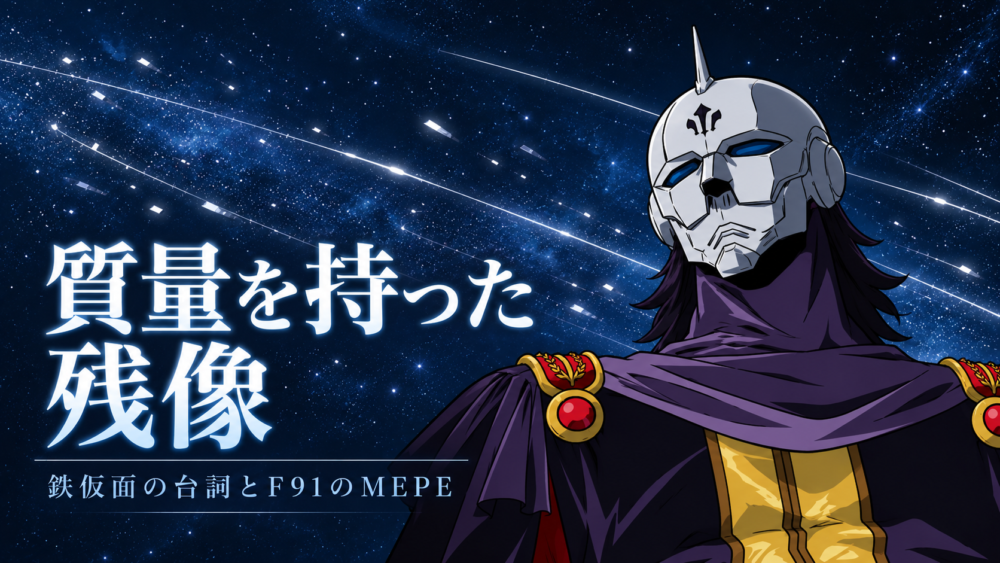
Disclosure: This article contains affiliate advertisements. As an Amazon Associate, this site earns from qualifying purchases. Covers and character illustrations are AI-assisted interpretations created for this site.
Spoiler note: the scene and relevant story developments are discussed below.
- Film and episode
- Mobile Suit Gundam F91, the 1991 theatrical film. The scene is near the film’s climax, not a numbered TV episode.
- Speaker
- Carozzo Ronah, also known as Iron Mask. He is piloting the Rafflesia, not the Gundam F91.
- The scene
- During the final confrontation with Seabook Arno’s F91, Iron Mask is astonished by the afterimages that appear when F91 operates at full capacity. F91 is the source of the images.
“Afterimages with mass” is associated with Iron Mask’s surprise at the F91. It is not Seabook announcing an attack name, and it does not mean Iron Mask creates copies of himself. This article discusses the ending of the 1991 movie. The English phrase is our explanatory rendering of the Japanese expression, not a claim about one licensed subtitle edition.
Who pilots F91, and who pilots the Rafflesia?
Seabook Arno is the pilot of the Gundam F91. His opponent, Carozzo Ronah, is Cecily’s father and a figure on the Crossbone Vanguard side. Carozzo’s silver mask gives him his familiar name, Iron Mask. In the final battle he operates the large mobile armor Rafflesia.
Keeping those roles straight is crucial to the quote. F91 produces the confusing images; its opponent struggles to account for them. The official Iron Mask profile provides the character reference. The cover illustration depicts the observer, not the mobile suit generating the effect.
What does MEPE have to do with the afterimages?
An official Gundam feature about an F91 afterimage figure connects the effect to full operation, forced cooling and the peeling away of the armor surface. Its explanation treats the phenomenon as more than ordinary visual blur: material from the machine’s surface is part of the fictional mechanism.
That does not mean multiple complete, independently functioning F91s are created. The important distinction is between the actual machine and the misleading images around it. Nor should the setting be presented as a demonstrated piece of real-world physics.
These three AI-assisted interpretations were created for this site using official design references and explanations. They are not official film frames or exact diagrams of mechanisms, particles or speed.
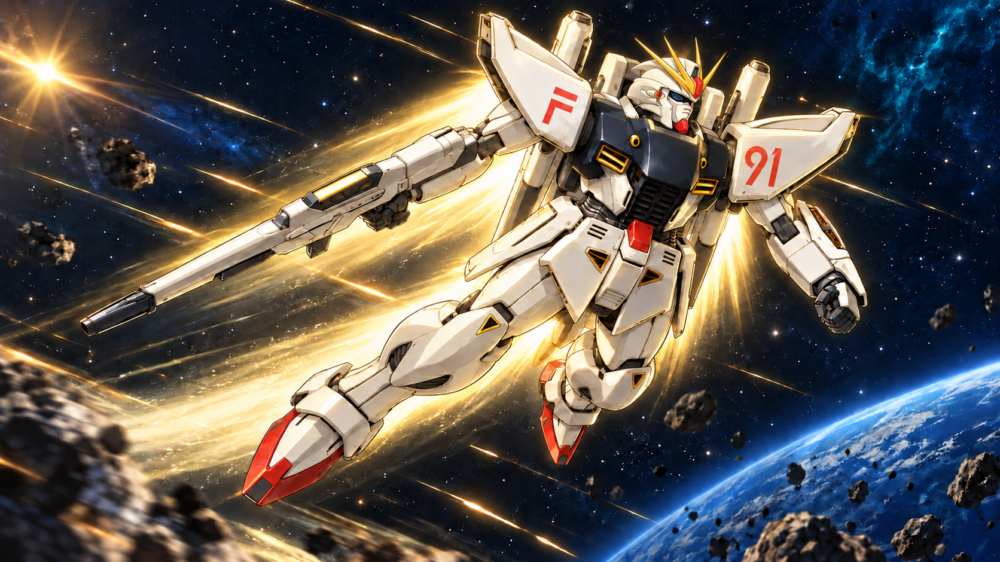
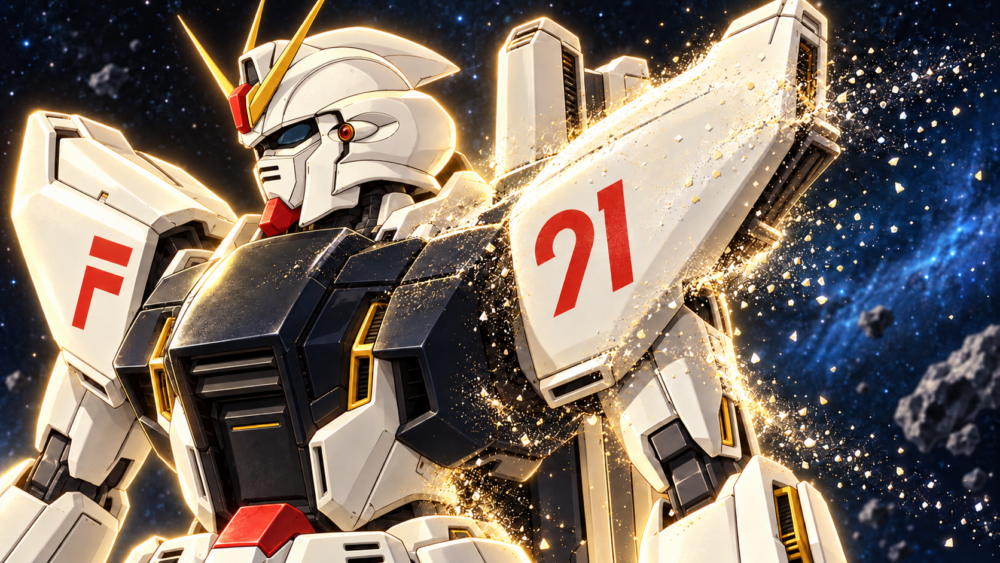
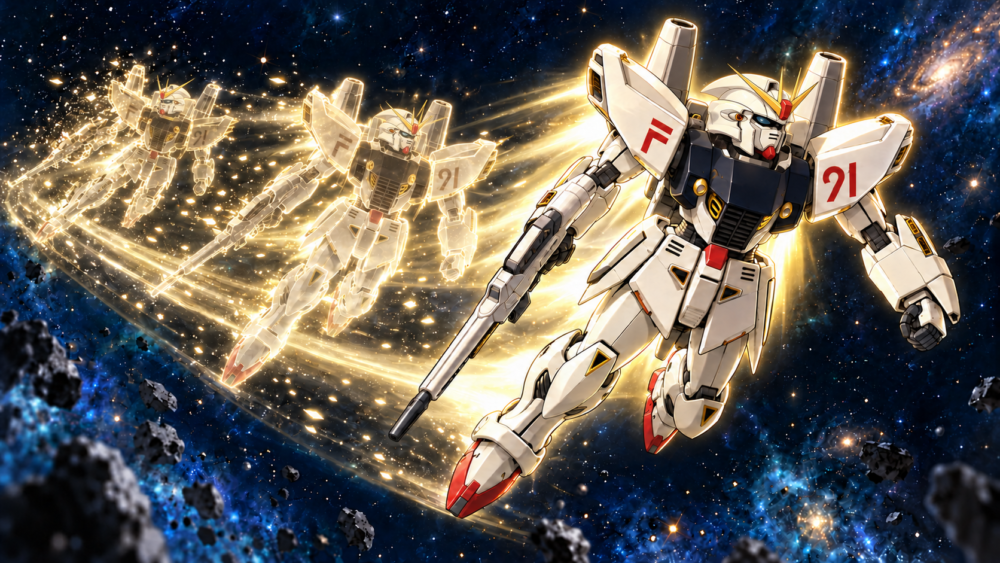
The official product feature dates from 2010. We use its explanation of the setting, not its old prices or order information. It does not establish that the limited figure discussed there remains available today.
Why is Iron Mask’s reaction memorable?
The Rafflesia looks overwhelming in size and armament. Against it, the smaller F91 displays movement that cannot be understood through size or firepower alone. Showing the powerful opponent struggling to identify the real target helps the audience feel the reversal.
The wording itself also creates tension. “Afterimage” suggests something seen after movement, while “mass” suggests a material presence. Putting them together makes the opponent’s disbelief compact and memorable. This is our interpretation of the scene’s dramatic effect, rather than an additional technical specification.
A standard F91 model is not an afterimage edition
The related product below is the HGUC 167 Gundam F91, a standard 1/144 assembly kit. It represents Seabook’s mobile suit, not Iron Mask’s Rafflesia. It is neither quote-printed merchandise nor a clear “afterimage” version.
The ROBOT Spirits item in the historical official article is a different product line. Its special edition and accessories must not be attributed to this HGUC kit. Buying one standard kit does not supply multiple extra F91s for an afterimage display.
For a display inspired by the scene, our Gunpla posing guide covers natural stances and supported action poses. Check the kit’s actual connection and stand requirements before attempting an airborne display. This article is not a hands-on kit review.
Frequently asked questions
Who says the line?
Carozzo Ronah, known as Iron Mask. It is his response to the F91’s effect, rather than Seabook naming a special move.
Which episode is it in?
The source is the climax of the 1991 theatrical film. There is no original TV episode number.
Are the images independent clones?
No. The official explanation connects them with armor-surface shedding during full operation and the MEPE effect. It does not describe the creation of extra, independent mobile suits.
Further reading and sources
- Gundam F91 and Char’s Counterattack music guide: official listening references.
- Official F91 afterimage-edition feature: explanation of MEPE and the images.
- Official Iron Mask profile.








Comments